
Guide on How to Protect Your Pokemon Cards

Everything you need to keep your collection safe, organized, and looking pristine.
Whether you are just starting out or have been collecting for years, protecting your Pokemon and TCG cards is one of the most important habits you can build. Cards can lose value quickly if damaged — a single scratch, bend, or moisture exposure can drop a card from a PSA 10 to a PSA 7, significantly reducing its worth. This guide walks you through the core protection methods, from the basics to the collector's gold standard setup.

1. Sleeve Your Cards — The Bare Minimum
Sleeving is the foundation of any card protection strategy. A card that is not sleeved is exposed to fingerprints, dust, surface scratches, and humidity every time it is handled. Sleeves create a thin but effective barrier between the card and the outside world.
Panda Cards stocks a range of perfect fit sleeves suitable for all standard TCG card sizes. Shop perfect fit sleeves here.

2. Topload the Pokemon Cards That Are Most Precious to You
Toploaders are rigid plastic holders that provide a level of protection sleeves alone cannot offer. While sleeves guard against scratches and dust, toploaders protect against bending, creasing, and physical pressure — the type of damage that can occur during transport or when a card is accidentally sat on.
Why Toploaders Matter
The rigidity of a toploader means the card inside cannot flex. This is critical for highvalue cards where even slight whitening of the edges or corners from bending can drop a grade during professional grading. Collectors aiming for PSA or BGS submission should place cards in a sleeve first, then into a toploader.
Sleeving + Toploading — The Perfect Combo
The most effective basic protection setup combines both methods: sleeve the card first to protect the surface, then place the sleeved card into a toploader to guard against structural damage. This two-layer approach is the standard recommended by professional grading companies such as PSA, and is the minimum setup recommended for any card worth over $20.
Find our full range of toploaders at Panda Cards. Shop toploaders here.
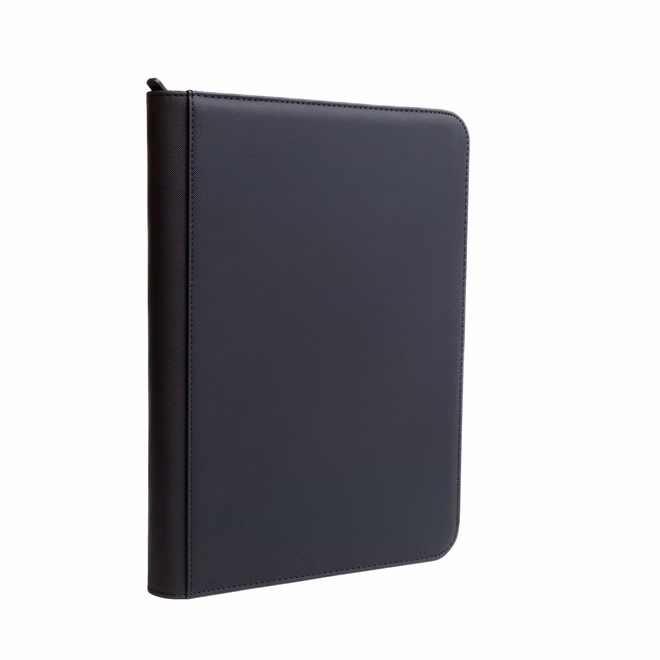
3. Binders — The Collector's Top Choice
For collectors who want to display their cards rather than store them out of sight, binders are the definitive solution. They allow you to view your full collection at a glance while keeping cards protected, organized, and easy to show off.
Different Types of Binders
Binders come in three primary pocket configurations, each suited to different collecting styles:
• 4-Pocket Binders — hold 4 cards per page and are compact and lightweight. They are ideal for carrying a selection of cards to trade meetups, tournaments, or casual gatherings without the bulk of a larger binder.
• 9-Pocket Binders — are the most popular choice among collectors. They display 9 cards per page (18 when the binder is fully open), offering a balanced view of your collection while maintaining a manageable size. A standard 9-pocket binder holds approximately 360 cards.
• 12-Pocket Binders — hold 12 cards per page and are best suited for serious collectors managing large sets or players who want to store four copies of the same card side by side for easy playset management.
Toploader Binder vs. Sleeve Binder
Beyond pocket configuration, collectors must choose between two fundamental binder types:
Toploader Binder — Recommended for Important or Expensive Cards
Toploader binders feature oversized pockets specifically designed to hold cards already inside a toploader. This provides complete, rigid protection for each card on every page. The combination of sleeve, toploader, and binder represents the most comprehensive
protection available outside of professional grading. This setup is strongly recommended for any card you consider a centerpiece of your collection.
Sleeve Binder — A Solid Choice for General Collections
Sleeve binders are standard binders where sleeved cards slide directly into the pockets. They are thinner, lighter, and more practical for large collections where toploading every card is not feasible. They still provide excellent protection against dust, handling wear, and minor moisture exposure.
It is worth noting that binders do more than just protect your cards — they transform your collection into something you can actively enjoy. Flipping through a well-organized binder and admiring your cards is one of the most satisfying parts of the hobby.
Panda Cards carries a curated range of both toploader and sleeve binders. Shop binders here.
Quick Reference: Which Protection Level Is Right for You?
For budget or common cards, a basic sleeve is all you need. For cards you like and plan to keep, sleeving combined with a deck box or binder is the standard setup. For valuable or rare cards, the recommended approach is to sleeve, topload, and store in a toploader binder. For cards intended for professional grading, use a penny sleeve, and a semi-rigid card saver before submission.
Final Thoughts
Card protection does not have to be expensive or complicated. Starting with sleeves alone is already a significant step up from handling bare cards. As your collection grows and the value of your cards increases, adding toploaders and investing in quality storage becomes a natural progression.The best investment you can make in the hobby is not just buying cards — it is ensuring the cards you already own stay in the best possible condition. A PSA 10 copy of a card is worth multiples of a PSA 7, and that difference almost always comes down to how well the card was stored and handled.
At Panda Cards, we stock everything you need to protect your collection at every stage — from your first sleeve to full toploader binder setups. If you have any questions about which products are right for your cards, feel free to reach out to us directly.
Happy collecting. — The Panda Cards Team


A useful option for shared tracking notes is community-maintained wiki, especially when entries need to stay easy to update.
If you are looking for a very basic MySQL instance for a small project, the details on providers like freemysqlhosting and freesqldatabase are worth reviewing. The page highlights that these services offer MySQL 5.5 with a 5MB free tier, which is useful to know before committing time to setup. For a quick comparison of MySQL 5.5 free tier providers, this is a clear and direct resource.
Great article with practical advice for anyone who wants to keep their Pokémon card collection in excellent condition. I recently came across https://chicken-road1.net/, and I appreciate websites that are just as easy to navigate and well organized as this guide. The tips about proper storage and careful handling are very useful, especially for collectors who want to preserve their cards for years. Thanks for sharing such clear and helpful information!
It took time for people's perceptions of games to shift. Through a gradual, almost silent https://melbetapk.pk/ process, they become a part of everyday digital consumption. As they share space with social networks, multimedia platforms, and other types of content, they no longer offer the same contrast as they once did. It is likely that this normalization is a reflection of something deeper: an ongoing adaptation to a society where living digitally is the norm rather than the exception.